 Ashley & Staff
Trains, buses and trams
AshleyA bus is a small room with a hissing door, a great many legs and a floor that hums, and a station adds more noise and bigger crowds. Large crowds, small spaces and sudden loud noises can overwhelm a puppy, so I'd like to meet them slowly, starting at the stop, before I go anywhere.
How to get a puppy used to trains, buses and trams
- Step 1
Practise at home
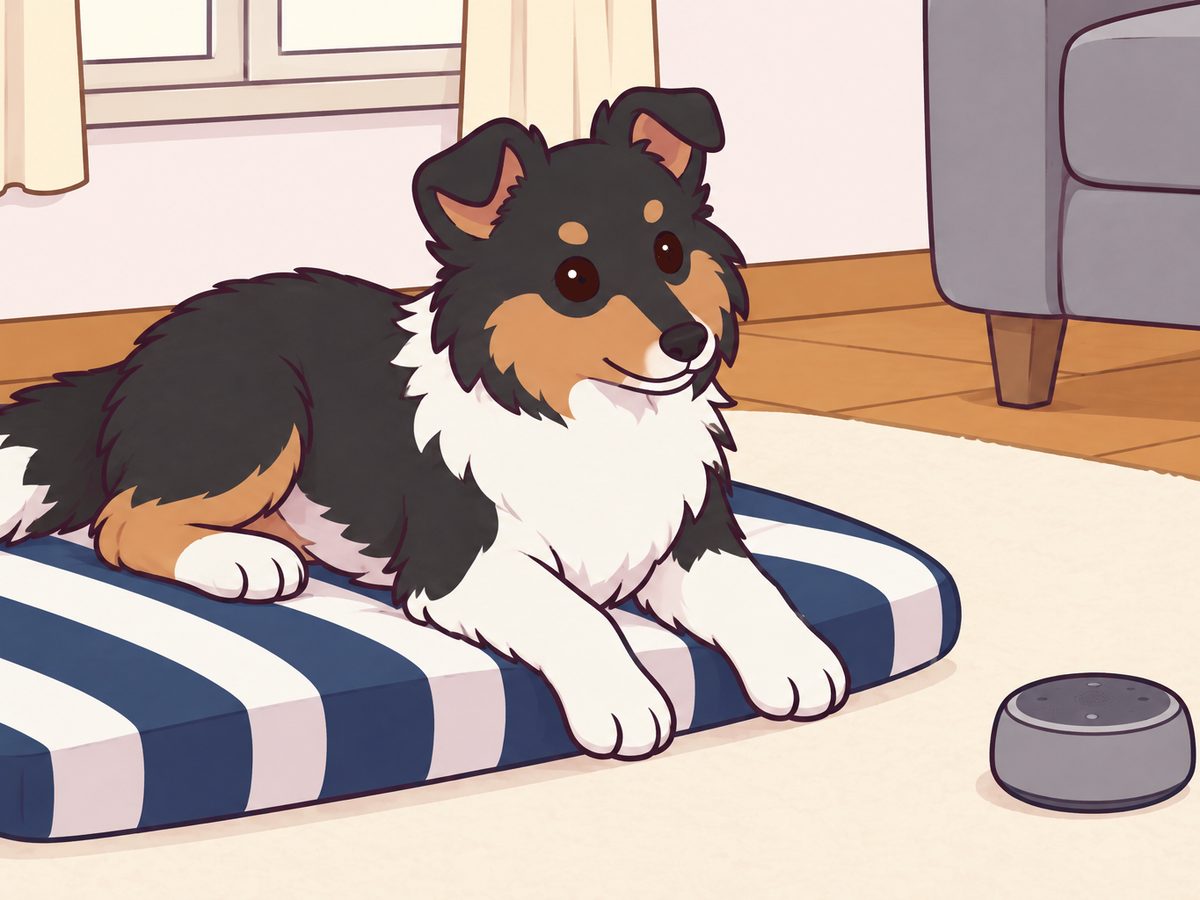
Practise Sit, Lie down, Settling on my mat and Leave it at home first. Then play recordings of travel sounds very quietly while your puppy relaxes, raising the volume only while they stay calm, with praise or treats.
- Step 2
Watch from outside
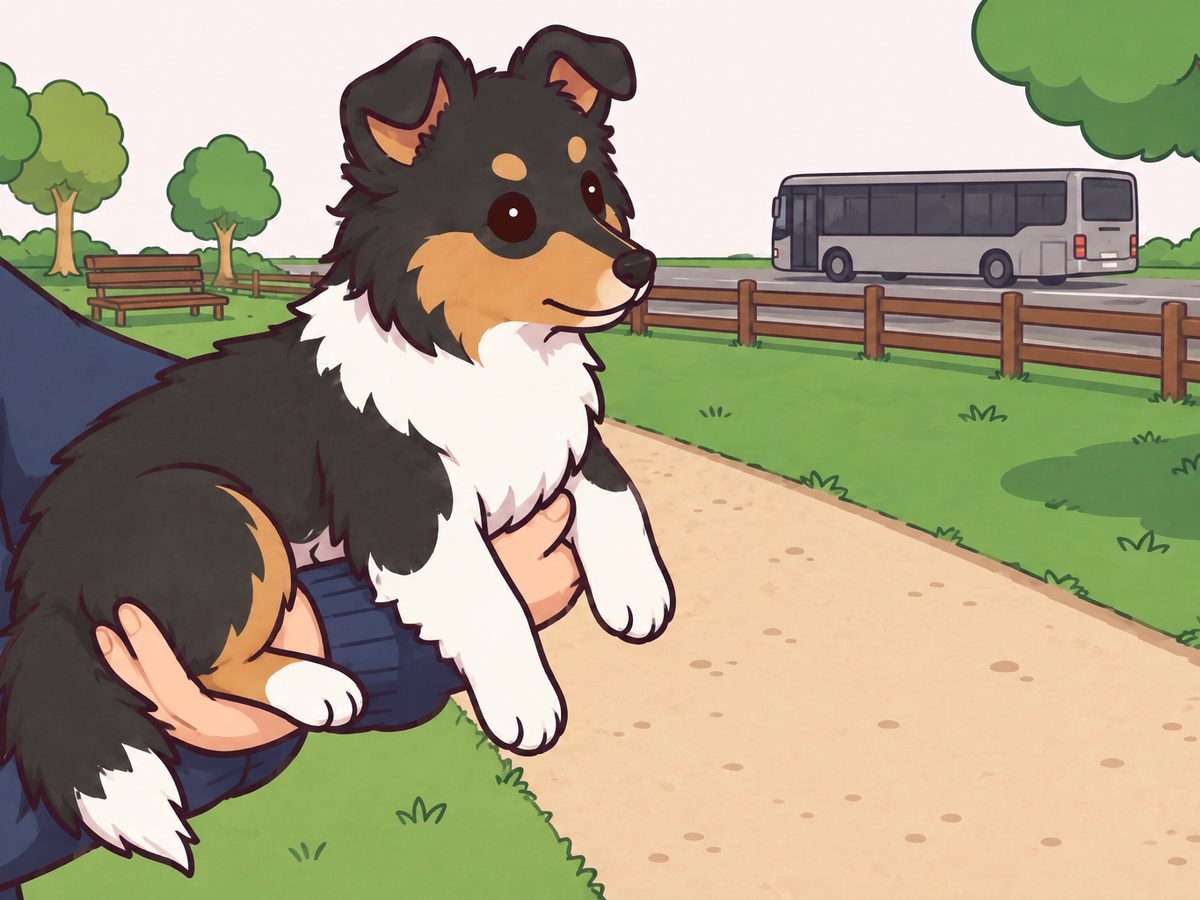
Carry your puppy until your vet says they may walk outside the garden. Stand briefly outside a stop or station, far enough away for them to stay relaxed, with praise or treats as a vehicle comes and goes.
- Step 3
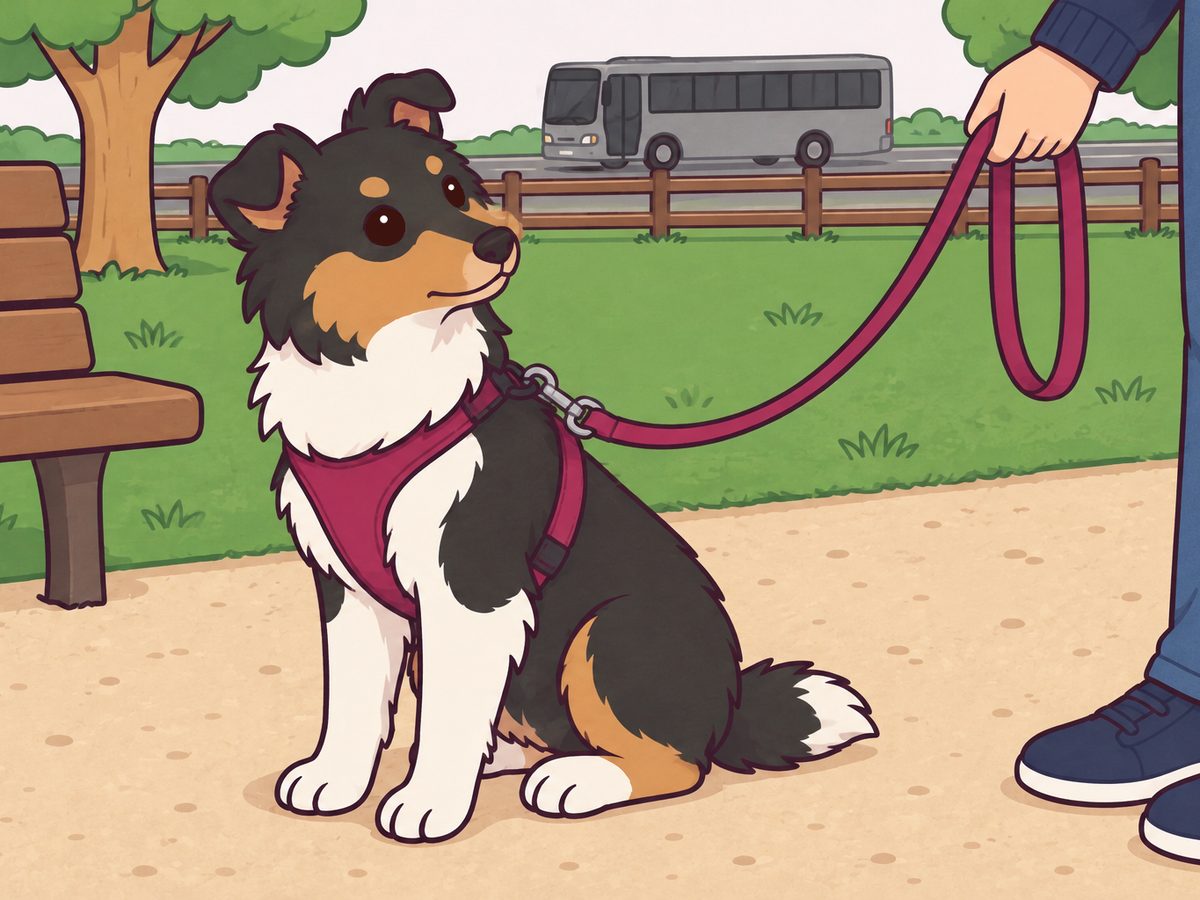
Wait at a quiet stop
Move closer gradually. When your vet says your puppy may walk outside the garden, wait on a quiet platform or at a quiet stop, away from rush hour and busy routes, on a fixed-length lead.
- Step 4
Take a short ride
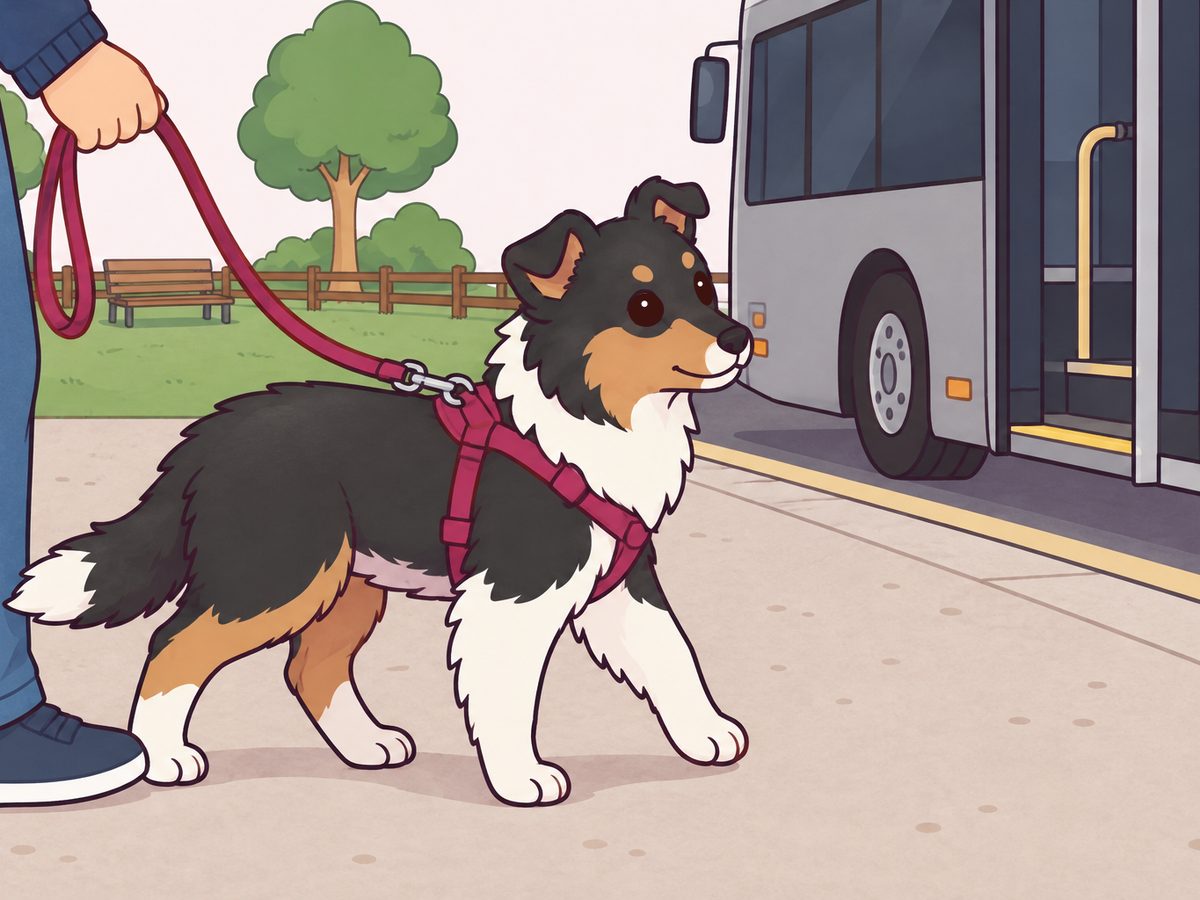
Take a very short, quiet ride first, then build up gradually to longer ones, and do not add too many new experiences in one day. Watch for freezing, barking or cowering.
- Step 5
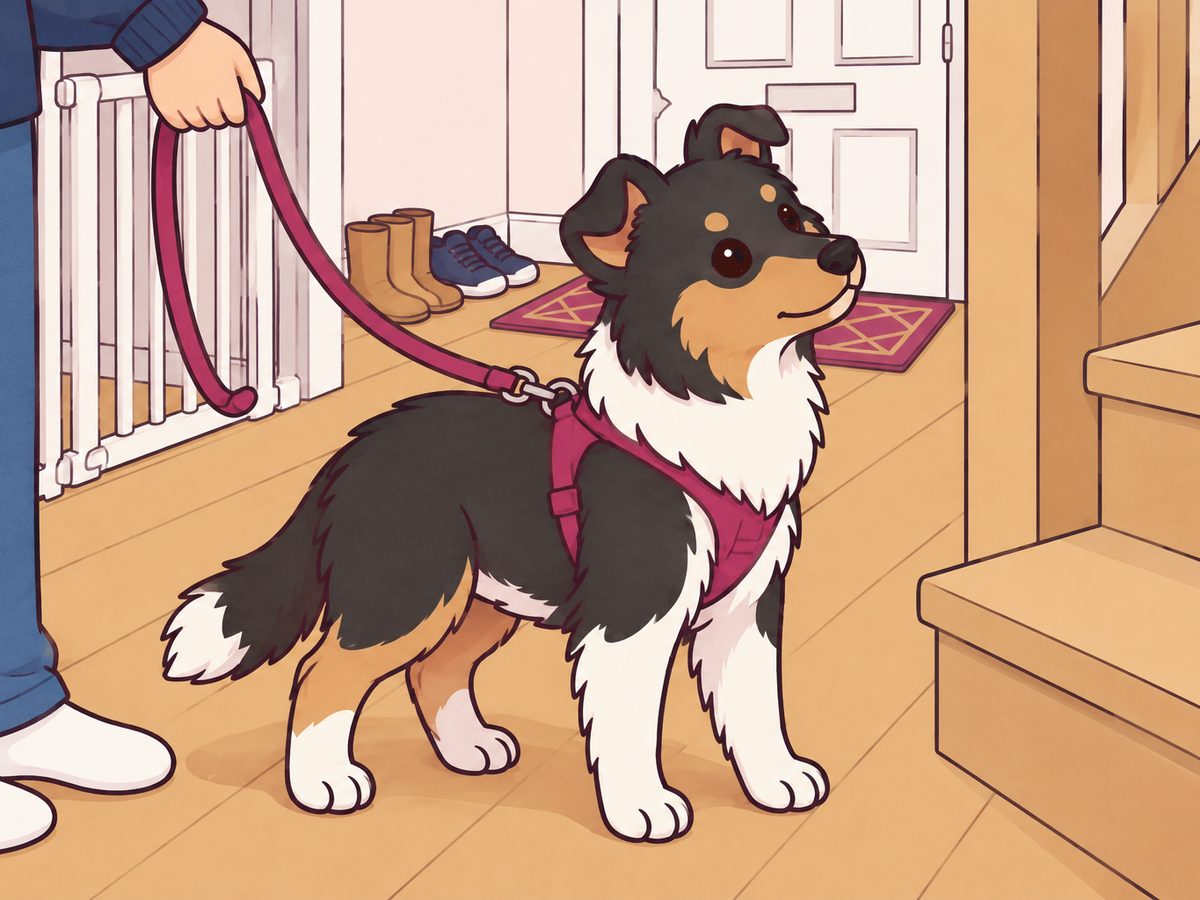
Use stairs or a lift
At stations, use the stairs, as taught in Stairs, or a lift. Your puppy never walks on an escalator, because its ridges can damage their paws.


 Good to know
Ashley: Not every bus, tram or train takes dogs, and the rules differ between operators, so check with the travel provider before we set off. Some may ask for a muzzle, which Wearing a muzzle teaches.
If that doesn't workAshley: If I look worried, step back, move farther away and shorten the outing, and on a bus get off at the next opportunity and calm me somewhere quiet. If I am tired, take me home to rest, and if I am frightened, give me space and ask my vet. Some dogs never cope with travel, and that's fine.
Never do thisAshley: Never frighten or overwhelm me, or force me to greet anyone. Never walk me in public before my vet says it is safe. Never let me walk on an escalator, and never use a flexi-lead or long line on transport.
Ashley & Staff · a tricolour collie puppy and the staff she is trainingashleyandstaff.com/learning/trains-buses-and-trams/
Between reports, I post on Instagram most days.
@ashleyandstaff