 Ashley & Staff
Why are collies sable, tricolour or blue merle?

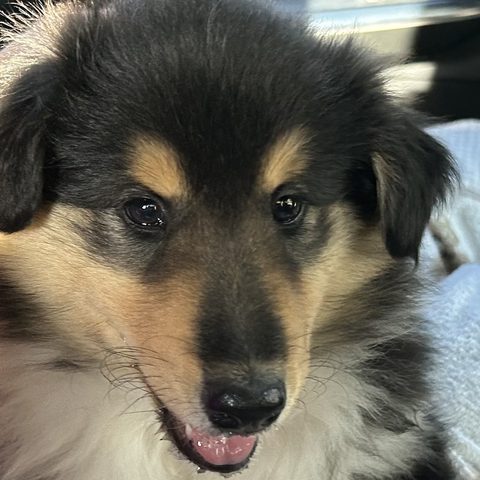
The short answerEach colour comes from genes. One gene decides where a dog makes golden pigment and where it makes black, giving sable or tricolour, and a separate gene called merle turns patches of black into a blue-grey marble. I am a tricolour: black, with tan and white.
The longer story
The Royal Kennel Club accepts three collie colours: sable and white, in any shade from light gold to deep mahogany; tricolour, mostly black with tan on the legs and head; and blue merle, silvery blue marbled with black. America also allows white.
Sable and tricolour are two versions of the same gene, and sable is the stronger of the two. That means a sable collie can carry tricolour without showing it and have tricolour puppies. Scientists have shown this for dogs in general, and the collie breed's health charity says the same for collies.
Merle is caused by a short extra piece of DNA in a gene called PMEL. One copy gives the marbled coat. Two copies, which happen when two merles are bred together, give a "double merle", usually a much whiter dog that is far more likely to be deaf or have eye problems: in one study, a quarter of double merles were deaf in at least one ear, against about 4 in 100 single merles. Since 2013 the Kennel Club has refused to register puppies from two merle parents.


The merle gene change is found in collies, Shetland sheepdogs, Great Danes and dachshunds, and may be older than dog breeds themselves.
The exact DNA changes behind each colour pattern, which scientists are still revising.
Between reports, I post on Instagram most days.
@ashleyandstaff