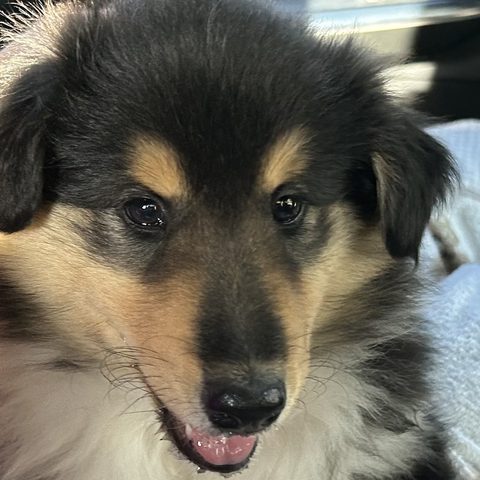
 Ashley & Staff
Why do I wag my tail?
The short answerA wag means I am excited and paying attention. It does not always mean I am happy. To know how I feel, look at the rest of me as well: a loose, wiggly body with a sweeping wag is friendly, and a stiff body with a fast, twitchy wag is not so relaxed.
The longer story
A wagging tail is easy to see, which makes it a good signal. The American Kennel Club says the faster the wag, the more worked up the dog. A tail held high suggests a more confident dog, and a low or tucked tail usually means fear or stress.
Scientists in Italy found something you cannot see without a video camera. In a 2007 study of 30 pet dogs, the dogs wagged slightly more to the right when they saw their owner, and more to the left when they saw a large dog they did not know. A later study found dogs got more anxious watching a video of a dog wagging to the left. Other scientists are not convinced: in a test with a robot dog, real dogs did not react the way the left-right idea predicted.
Dogs wag far more than wolves or other wild dogs, and nobody knows why. One idea is that wagging came along with tameness. In a long experiment, foxes bred only to be tame, over about 40 generations, began wagging like dogs and grew curly tails, though nobody had bred them for either.


Even at three to five weeks old, puppies raised by people wag and look at human faces more than wolf cubs raised the same way.
Why dogs wag so much more than wolves, and whether that came from people choosing it or from the dogs' own biology.
Between reports, I post on Instagram most days.
@ashleyandstaff