 Ashley & Staff
Why do dogs love people?
The short answerScientists cannot measure love, but they can measure bonding, and dogs bond with their people very strongly. We look to you for help, we feel braver with you in the room, and it starts when we are tiny puppies. The hormone story you may have heard is less certain than it sounds.
The longer story
One big difference between dogs and wolves is looking. In a 2003 study, dogs and wolves raised by people were given a puzzle that could not be solved. The dogs turned round and looked at the person. The wolves did not. Even at three to five weeks old, dog puppies raised by people gaze at human faces more than wolf cubs raised in exactly the same way.
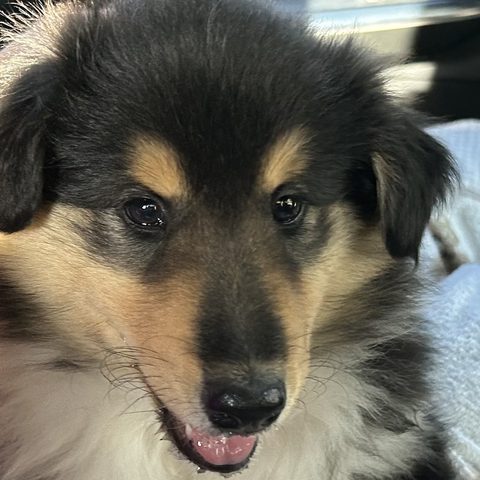
Dogs also use their owner as a safe base, as a small child does with a parent. In two experiments, dogs kept working at a puzzle for longer when their owner was in the room, and a stranger did not have the same effect. Herding breeds, like me, looked longer at their owner and chose to stay close to them.
You may have read that when a dog and its owner gaze into each other's eyes, both get a rush of oxytocin, sometimes called the love hormone. One 2015 study found that. A 2019 study of 20 dogs and owners found no consistent rise, and the earlier results it reviewed were mixed. A small genetic study has also linked a few gene variants to how much dogs seek out people, but its authors said plainly that they had not found a "social gene".


Faced with an impossible puzzle, dogs look round at a person for help, and wolves raised by people do not.
How much of this bond was shaped over thousands of years of living with people, and how much each dog learns in its own life.
Between reports, I post on Instagram most days.
@ashleyandstaff